

Some places feel more meaningful once you understand what they’ve survived. That was exactly my experience visiting two historic cathedrals of the British Isles – St Patrick’s Cathedral in Dublin and St Giles’ Cathedral in Edinburgh.
At first glance, they’re both grand medieval churches sitting in the heart of historic cities. But once I learned about the centuries of political conflict, religious upheaval, and restoration behind them, the experience became far richer.
These aren’t frozen monuments or museum pieces. They’re still active places of worship woven into the daily life of their cities, and that living history is what stayed with me most.
The Historic Cathedrals of the British Isles
St Patrick’s Cathedral, Dublin
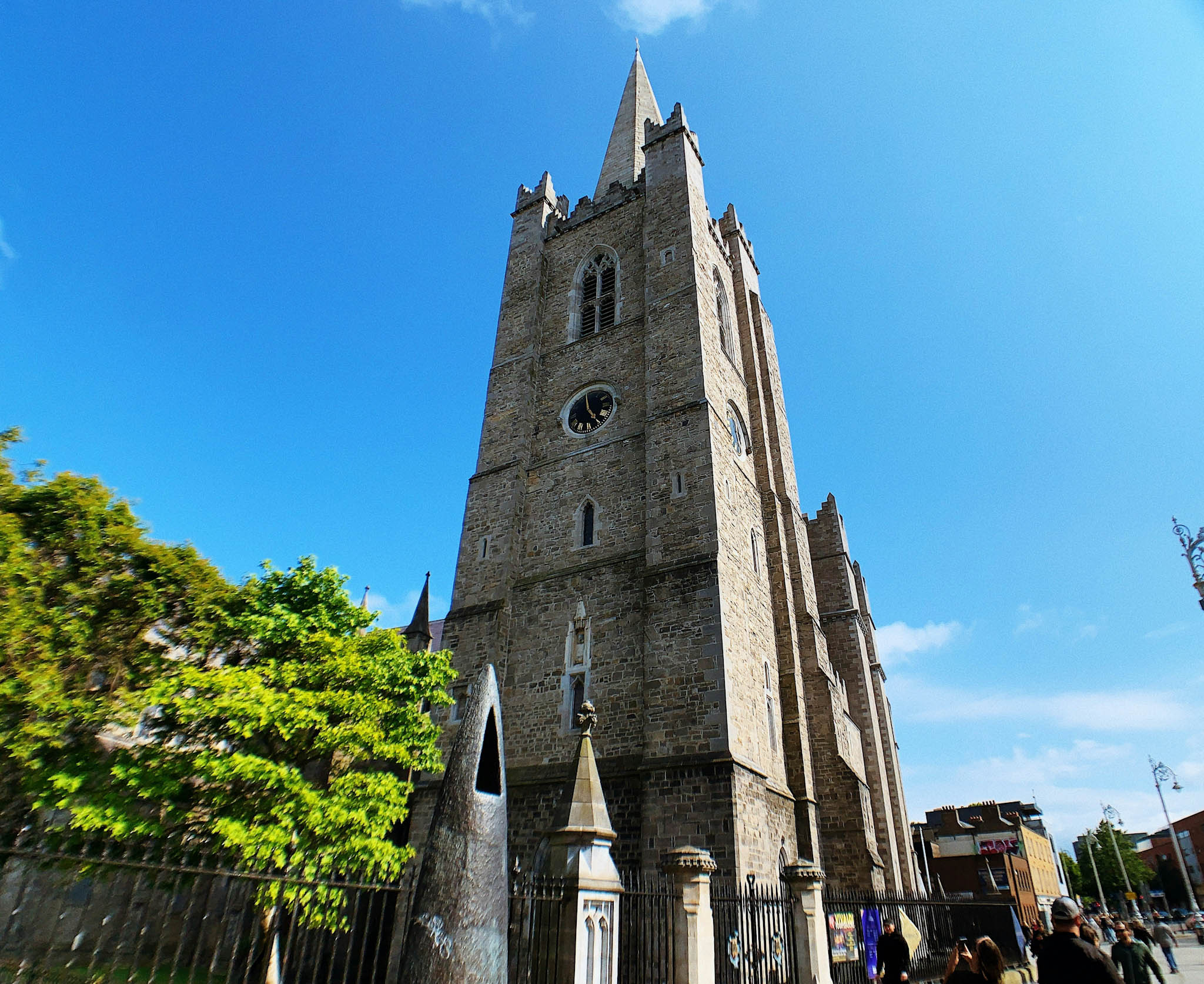
St Patrick’s Cathedral stands on what’s believed to be the oldest Christian site in Dublin. Tradition says Saint Patrick himself baptised converts here in the fifth century. He used a nearby well that still exists beneath the current cathedral.
The building you see today mostly dates back to the 13th century. However, a major Victorian restoration in the 1860s dramatically reshaped parts of it. Benjamin Lee Guinness funded much of that reconstruction after centuries of decline. That’s the reason why some of the exterior stonework and stained glass look noticeably newer than the medieval structure surrounding them.
What surprised me most was the scale of the interior. From outside, St Patrick’s feels relatively restrained compared to some European cathedrals, but stepping inside completely changes that impression. The nave is the longest of any church in Ireland, and the sheer height and openness of the space is difficult to appreciate until you’re standing in it yourself.
The cathedral still functions as a working church, which gives it a very different atmosphere from heavily touristed religious sites elsewhere in Europe. During my visit, people were quietly praying while visitors moved through the aisles taking photographs and reading plaques. It felt lived-in rather than preserved.
For visitors organizing broader Irish itineraries, guided trips to Ireland that include Dublin as a starting point typically allow a morning at the cathedral before continuing to the medieval quarter, Trinity College, and the National Museum.
Exploring the Area Around St Patrick’s
Marsh’s Library
One thing I loved about visiting St Patrick’s was how much history surrounds it beyond the cathedral walls. The church sits in the Liberties, one of Dublin’s oldest neighbourhoods, where traces of the medieval city still shape the streets.
Just nearby is Marsh’s Library, Ireland’s oldest public library, built in 1707 and remarkably unchanged since then. Walking into the library felt like stepping into another century. The shelves still hold thousands of rare books from the 16th to 18th centuries. The old wire reading cages, designed to lock scholars in with valuable manuscripts to prevent theft, are still intact.
Christ Church Cathedral
About a ten-minute walk north of St Patrick’s is Christ Church Cathedral, Dublin’s other great medieval cathedral. For centuries, the two churches competed for status and influence despite standing so close together.
Christ Church’s enormous medieval crypt was another highlight for me. The crypt at Christ Church, which runs the full length of the building, is the largest medieval crypt in Ireland and contains a 12th-century carved cat and mouse that have been there since the Middle Ages.
St Giles’ Cathedral, Edinburgh
For visitors combining Edinburgh with wider Scottish travel, Scotland tours & trips that include the Royal Mile typically allocate time to St Giles’ as part of a broader Old Town walk.
When I first stepped foot in Edinburgh, one of the first things I noticed was how completely St Giles’ Cathedral dominates the Royal Mile. Its crown-shaped steeple rises above the Old Town skyline and seems to appear from almost every angle as you walk through the city centre.
Officially, it’s known as the High Kirk of Edinburgh rather than a cathedral in the administrative sense. Historically, it has been at the centre of Scottish religious and political life for centuries.
The Thistle Chapel is the spiritual home of the Order of the Thistle, Scotland’s highest order of chivalry. It’s filled with incredibly detailed woodcarvings, stained glass, and heraldic symbols. I spent far longer there than I expected, amazed with tiny carved animals, foliage, and angels hidden throughout the chapel.
Standing inside, I could feel how deeply tied this building is to Scotland’s national identity. This was where the National Covenant was signed in 1638, helping ignite decades of conflict over the future of the Scottish church.
Exploring the Area Around St Giles’
Outside the cathedral, the surrounding buildings continue the story. Adjacent to St Giles’ is Parliament Hall, where the Scottish Parliament met until the Acts of Union in 1707. Its hammer-beam roof is stunning, and the fact that you can still walk through parts of the complex during court hours makes the entire area feel unusually accessible for somewhere with so much institutional history.
What struck me most about this section of Edinburgh was how concentrated everything feels. Within just a few hundred metres, you’re moving through layers of religious, political, literary, and architectural history all at once.
Final Thoughts
What I appreciated most about the two historic cathedrals of the British Isles was that neither tries to present itself as a polished historical attraction disconnected from real life.
They’re still functioning churches with active congregations, regular services, and ongoing community life. Visitors move through while worship continues, which creates a very different atmosphere from many historic religious sites across Europe.
If you visit, I’d recommend going early on a weekday morning before the crowds build. That’s when both cathedrals feel at their most authentic. Quiet, active, and still doing what they were built to do centuries ago.
If you are a traveler who needs a Standard Visitor Visa for the United Kingdom, check out the link. This might help you 🙂
