

Europe’s cities are shaped not only by architecture but by the statues that stand watch over their streets, squares and waterfronts. From monumental marble gods to sleek modern sculptures in steel and glass, these works of art define public space, mark historical memory and reflect shifting cultural values. Whether carved centuries ago or installed last year, Europe’s statues reveal the continent’s identity in ways both subtle and powerful.
Exploring them is like reading history in stone, each figure offering insight into the people, politics and creativity of its time. Some inspire awe with their scale, others charm with their intimacy; some commemorate kings and heroes, others honour ordinary people or abstract ideas. Together, they form an open-air museum stretching across borders.
Planning a Multi-City Sculpture Journey
Many travellers begin their European art itinerary by mapping cultural routes and major artistic hubs. Rail connections make it easy to move quickly between cities while carrying a sense of continuity through different eras of sculpture. One popular option is the Paris to Geneva train, which links two cities renowned for both classical and contemporary public art.
The journey takes travellers from the neoclassical grandeur of Paris to Geneva’s lakeside installations, creating a smooth transition between two contrasting artistic atmospheres.
Stone, Memory and Movement Across Europe
Travelling through Europe provides countless opportunities to encounter statues in unexpected places: mounted atop fountains, positioned on rooftops, hidden in parks, or standing bravely in vast squares. More than mere decoration, they reflect cultural memory, national pride, civic ideals and artistic experimentation.
Whether celebrating Renaissance heroes, acknowledging difficult histories or championing progressive ideas, Europe’s statues evolve alongside its societies, keeping the continent’s story alive through material form.

The Majesty of Parisian Sculpture
Paris has long been one of Europe’s greatest artistic capitals. Its statues are woven into the city’s identity, embellishing boulevards, gardens and bridges in almost theatrical fashion.
Tuileries Garden
Here, classical and modern sculptures sit side by side: Greek-inspired figures carved in marble, Rodin-esque bodies in bronze, and contemporary works that challenge traditional forms. The contrast highlights France’s commitment to continuously reinterpreting its cultural heritage.
Pont Alexandre III
This iconic bridge is guarded by four monumental gilded statues that celebrate Franco-Russian friendship. With their sweeping wings and dramatic poses, they create one of the city’s most unforgettable silhouettes.
The Thinker at Musée Rodin
Rodin’s most famous masterpiece symbolises contemplation and human complexity. Surrounded by tranquil gardens, it remains one of the city’s most powerful artistic experiences.
Geneva’s Sculptures by the Lake
In Geneva, statues take on a quieter, more reflective character. The lakeside and surrounding parks are dotted with contemporary installations that blend nature with artistic expression.
The Broken Chair
A dramatic 12-metre-high wooden sculpture standing on three legs, symbolising opposition to landmines and support for victims of conflict. Its scale and message make it one of the most striking public artworks in Europe.
Old Town Monuments
Geneva’s historic centre features statues dedicated to philosophers, reformers and leaders. A nod to the city’s long intellectual and diplomatic history.
Modern Lakeside Art
Minimalist sculptures placed along the waterfront engage with water, wind and light, turning nature into part of the artwork.
Crossing Borders in the Art Capitals of Europe
Artistic journeys across Europe often include routes stretching through Belgium, France and Switzerland, each offering unique sculptural traditions. Many travellers rely on efficient international rail links such as the train from Brussels to Paris, which connects two cities with some of the continent’s richest artistic legacies.
From Brussels’s comic-inspired sculptures to Paris’s neoclassical grandeur, the route creates an engaging contrast.
Brussels: Playful, Political and Proudly Artistic
Brussels brings a humorous and occasionally irreverent twist to public sculpture.
Manneken Pis
One of Europe’s quirkiest icons, this small bronze boy has become a symbol of the city’s mischievous spirit. His extensive wardrobe of costumes, from historical outfits to seasonal designs, turns the statue into a living cultural participant.
Comic Strip Route
Brussels celebrates its comic-book heritage through murals and statues of beloved characters such as Tintin and the Smurfs, turning the streets into a playground of colour and childhood nostalgia.
Royal Square Monuments
These more traditional statues honour kings, political leaders and historical figures, grounding the city’s humour in deeper cultural roots.
Florence: Cradle of Renaissance Sculpture
No discussion of European statues is complete without Florence, birthplace of some of the greatest sculptors who ever lived.
David (Michelangelo)
The most famous statue in the world stands tall at the Galleria dell’Accademia, embodying perfection in form and proportion. A replica in Piazza della Signoria allows the public to enjoy its majesty outdoors.
Perseus with the Head of Medusa (Cellini)
A dramatic bronze masterpiece on the Loggia dei Lanzi, it showcases the technical brilliance and narrative power of Renaissance sculpture.
Donatello’s Works
Florence’s museums hold numerous pieces by Donatello, whose innovations in expression and technique changed sculpture forever.
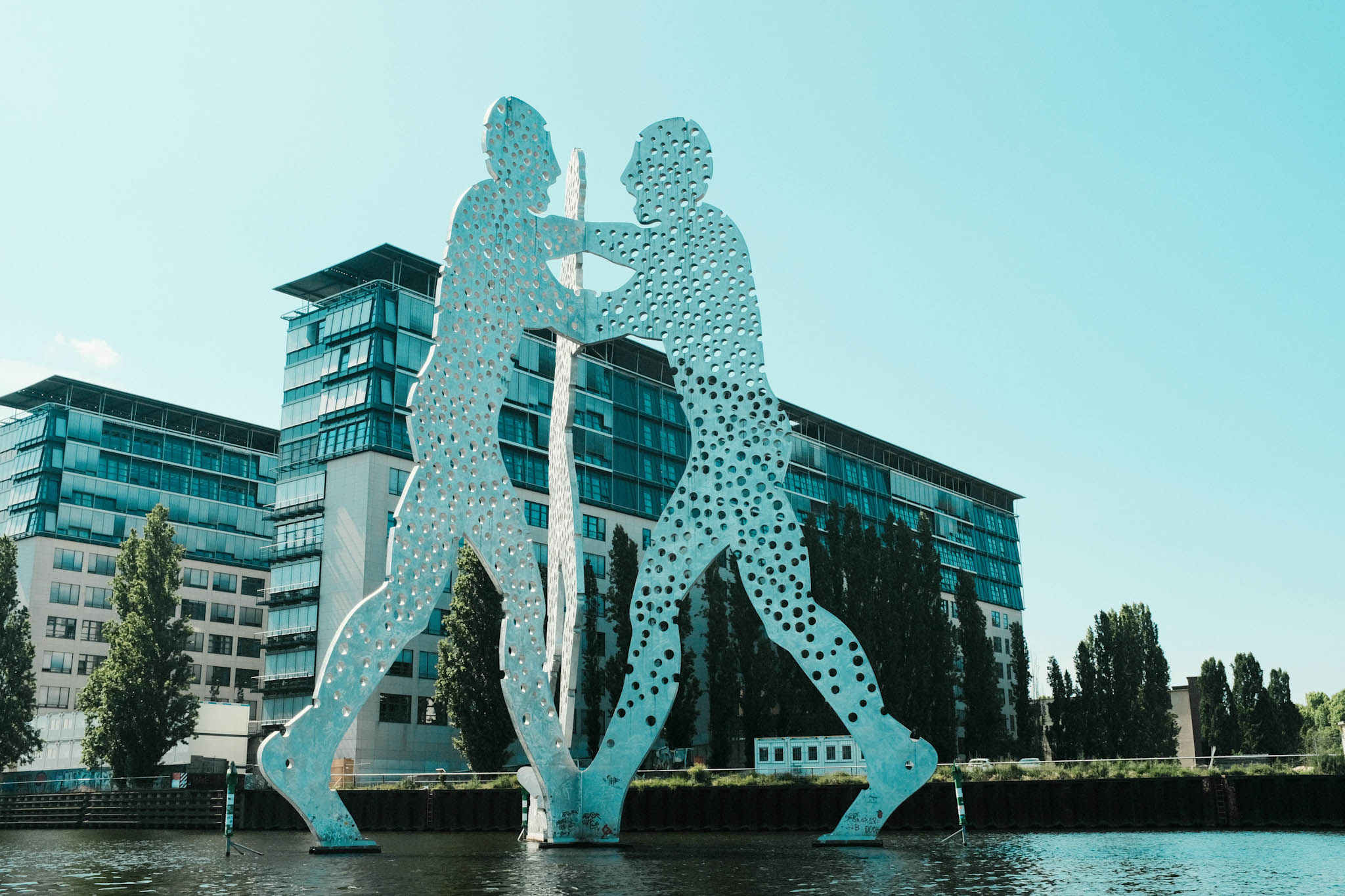
Berlin: Bold, Experimental and Transformative
Berlin’s statues reflect a city rebuilt, reimagined and committed to confronting its past.
The Soviet War Memorial
A monumental structure honouring soldiers who fell in the Battle of Berlin. Its scale captures the gravity of the city’s wartime history.
Molecule Man
A contemporary aluminium sculpture rising out of the Spree River, symbolising human connection. Its perforated body creates a mesmerising dance of light and shadow.
Art Along the East Side Gallery
Although painted murals rather than statues, many installations and sculptural elements along the former Berlin Wall preserve the city’s spirit of freedom and artistic rebellion.
Prague: Gothic Drama and Baroque Flourish
Prague’s statues bring a theatrical quality to the city’s skyline and streets.
Charles Bridge Saints
Lining the bridge like silent guardians, these baroque sculptures create one of Europe’s most dramatic urban scenes — especially misty mornings at sunrise.
Franz Kafka Monument
A modern kinetic sculpture by David Černý, reflecting Prague’s surreal, literary heritage.
Astronomical Clock Figures
Carved characters that move hourly, delighting crowds with a mechanical performance centuries ahead of its time.
Why European Statues Matter
Statues offer more than decoration:
- They preserve memory and identity
- They reflect shifting cultural values
- They turn public spaces into storytelling landscapes
- They inspire emotion, reflection and dialogue
- They bridge ancient and modern worlds
From marble heroes to abstract steel installations, Europe’s statues deepen the connection between people and place.
Final Thoughts: A Continent Carved in Imagination
Europe’s statues are more than stone and metal. They are embodiments of imagination, resilience and cultural pride. Each figure, each column, each sculpted face speaks across centuries. They invite travellers to pause, observe and understand the layers of history beneath their feet.
Whether you’re studying Renaissance masterpieces, wandering through contemporary installations, or discovering unexpected sculptures tucked into side streets, Europe reveals itself through its art… timeless, expressive and endlessly inspiring.
